A conversation with Clarissa Döttinger about form, emotion, and the silent strength of bronze.
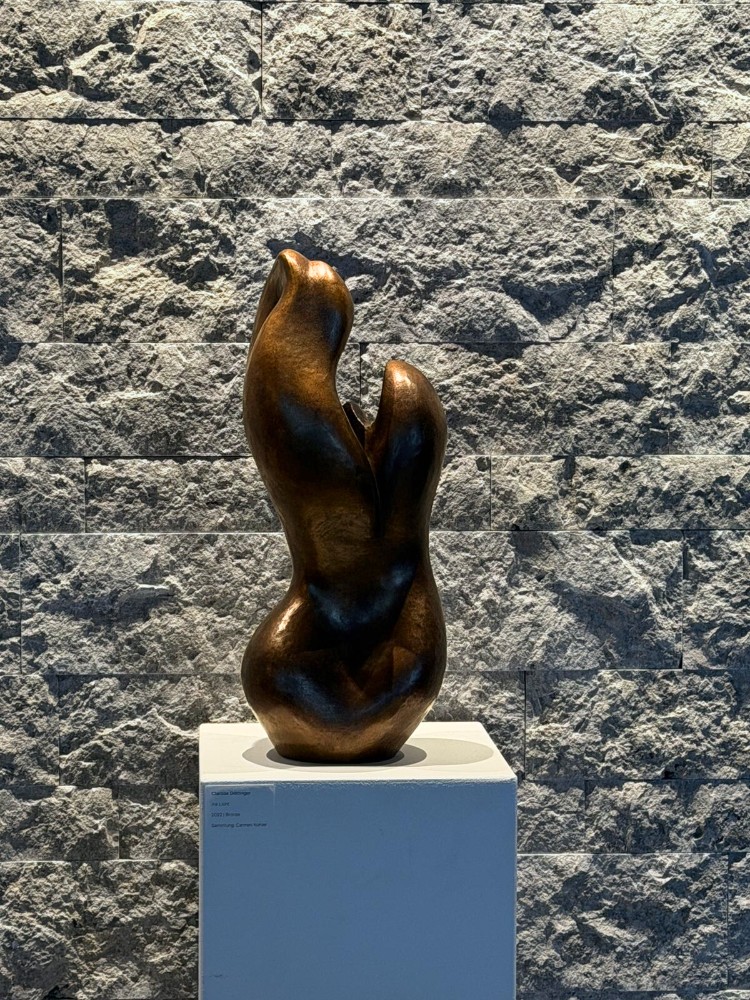
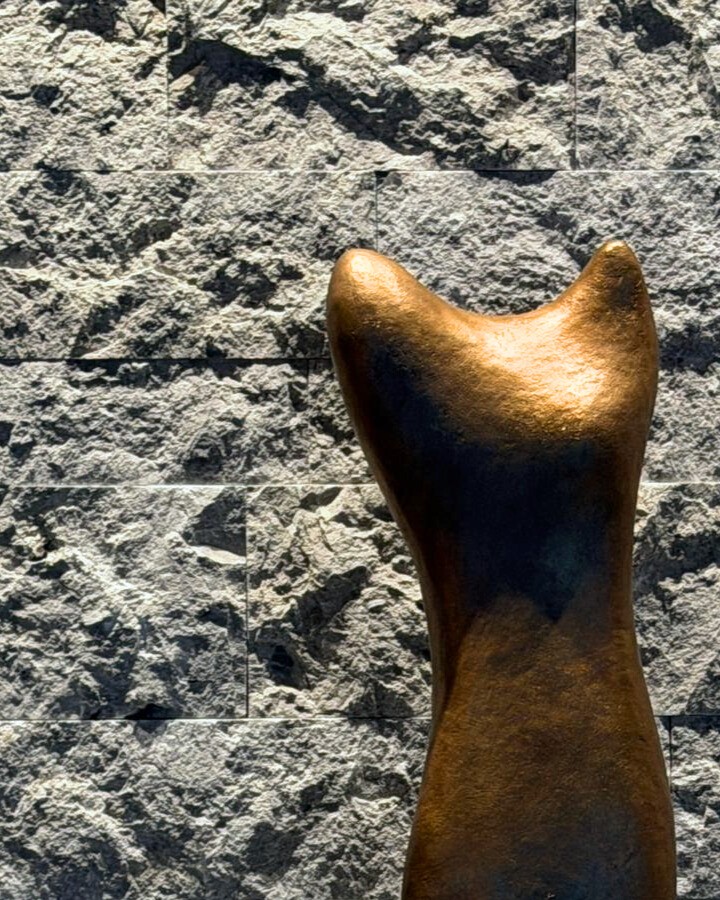
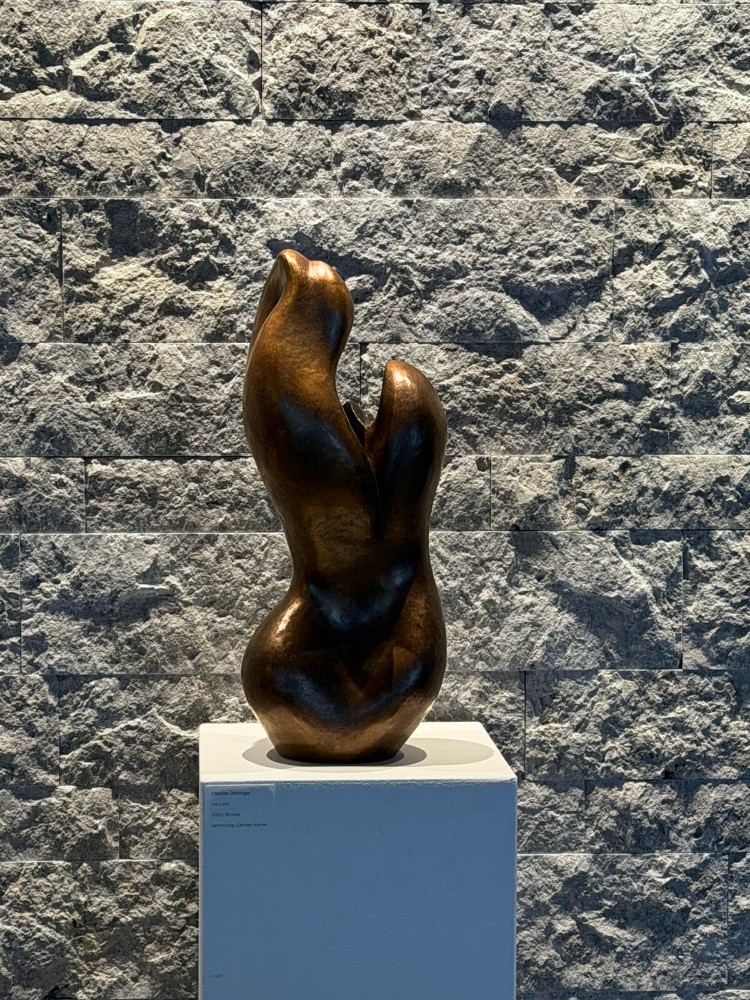
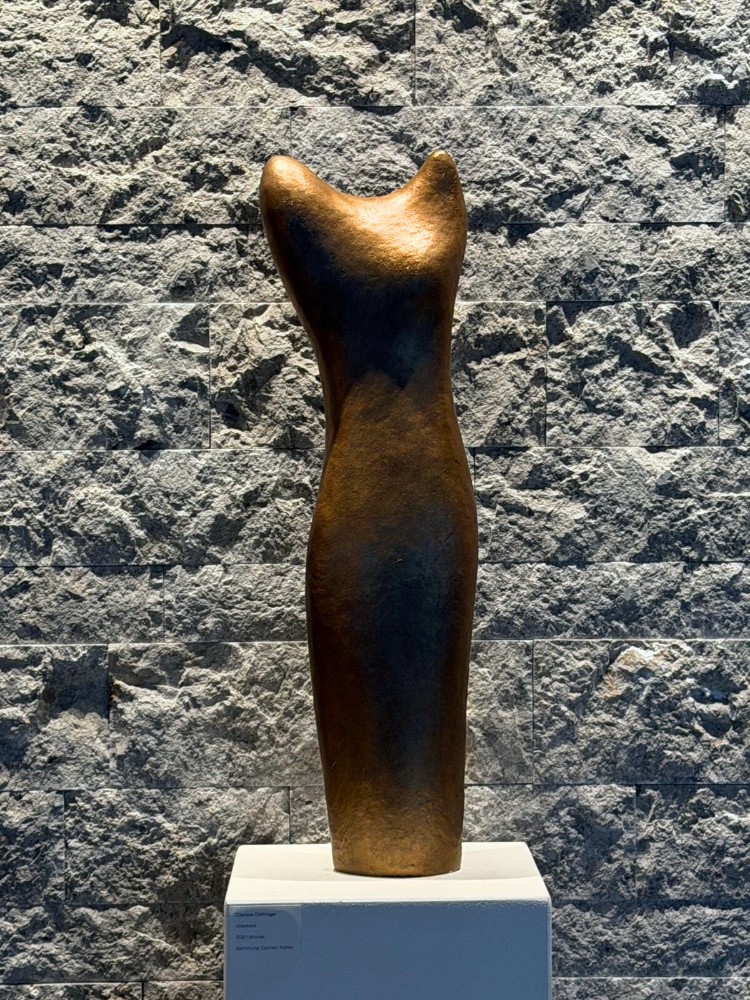
Two sculptures. Two silent gestures in bronze. They welcome people at the entrance of Engel Ayurpura – as part of the space, as an expression of an inner attitude. Created by Clarissa Döttinger, artist, art therapist, and Ayurveda practitioner, her work unites form and emotion, the inner and outer worlds. A conversation about the language of art, the essence of “Overview” and “Into the Light” – and about everything that cannot be explained, but can be felt.
Personal Journey & Inspiration
Your path combines painting, art therapy, and Ayurveda. How have these elements come together in your life?
For me, painting, Ayurveda, and art therapy are not separate paths – they all stem from the same search for wholeness. Ayurveda taught me to understand the deep connections between body, mind, and soul. Art therapy showed me how this unity can be experienced through creative expression. Today, all three areas flow into one another, enriching each other as a way to support people holistically.
Are there artists or artistic movements that have particularly influenced you?
Max Beckmann impresses me with the intensity of his self-portraits. Francis Bacon reveals the fragility of the human body and existential fears. Mark Rothko touches me through the depth of his color fields, Cy Twombly fascinates me with his playful and poetic visual language, Constantin Brancusi reduces everything to its essence, and Henry Moore opens new perspectives in sculpture. Each of them inspires me in a different way.
Can you imagine creating further works in the future for Engel Ayurpura or similar places of peace and inspiration?
Yes, absolutely. Engel Ayurpura and places like it – spaces that offer stillness, inspiration, and a return to oneself – are important for people. I would love to create and exhibit more works in such environments.
What does art mean to you today?
Art, for me, is a way to make the inner world tangible and share it with others. Both the experience of looking at art and the act of creating it are essential to life – like breathing in and out, like nature… like the Dolomites.
If you could leave a message through your sculptures, what would it be?
I don’t offer a specific message. Everyone is invited to discover what the sculptures awaken in them. They are an invitation to reflect. That is what beauty does to us: it expands and enriches our lives. We cannot do without it. That’s also how I understand Dostoevsky’s statement: “Beauty will save the world.” Especially today, we can tangibly improve life by learning to understand beauty – and by creating beautiful spaces.
Art, Material & Meaning
You are not only an artist, but also an art therapist. What connection do you see between creative work and inner healing?
In anthroposophical art therapy, creative expression and inner healing are closely linked. Through painting, drawing or sculpting, inner processes become visible, are expressed and brought into balance. Emotions, experiences or blockages that are difficult to put into words can find their expression this way. It stimulates self-healing forces, can release emotional blocks, and creates space for reflection, self-awareness and personal transformation. This creative path reconnects body, soul and spirit—and in doing so, opens the possibility for healing.
Bronze is a durable, almost timeless material. Why did you choose this medium?
To me, it’s the most beautiful material for sculpture. Marble is equally stunning, but it requires a very different approach. With clay, you build up the form slowly with your hands—it starts from nothing and grows. With stone, however, the form is already inside: you remove it from the outside in, using hammer and chisel (and later sandpaper). Once you chip something away, it’s gone. As Peter Rosenzweig once said: “Look, feel what’s inside the marble—and bring it out.”
Engel Ayurpura stands for stillness, lightness and conscious presence. Do you see parallels to your artistic work?
For me, artistic work begins with mindful observation. I have to see what is in harmony and what is not—whether something is convex or concave, whether the forms are balanced. So my creative process is also one of becoming more aware. At the same time, my sculptures are not just meant to be viewed, but experienced consciously. They invite silence. And when resistance and inner questions dissolve, a sense of lightness may arise. After a Panchakarma treatment at Engel Ayurpura, I felt this lightness physically—and perhaps also emotionally, like a cleansing or a clearing. That was my personal experience.
Bronze in Motion – The Stories Behind ‘Overview’ and ‘Into the Light’
Your sculptures are titled “Overview” and “Into the Light”. What emotions or thoughts did you express through them?
When I start building a sculpture with clay, I only have a vague sense of where it might lead. After my previous work “In the Midst”, I felt drawn to create something calmer—something reaching upward. “Into the Light” emerged from the idea of a seed, a concept I had explored both creatively and symbolically.
“Overview”, the larger bronze, conveys a sense of serenity and presence. What does the title mean to you?
In the midst of life, we often lack distance from what’s happening. Only later does a broader view emerge—and that’s exactly what I experienced while working on this sculpture.
“Into the Light” sounds like transformation and movement. Is there a personal story or theme behind it?
Yes, it’s about something new growing toward the light—like a plant unfolding, or perhaps the beginning of a new chapter in life.
Despite the solid material, your sculptures appear light and organic. What role does this formal language play in your work?
This sense of lightness and balance reflects a kind of playful freedom—very much in the spirit of Schiller’s words: “Man is only fully human when he plays.”
What do you hope people feel when they encounter your sculptures at the entrance of Engel Ayurpura?
I hope visitors pause for a moment and let the sculptures speak to them quietly. In that moment of stillness, a feeling may arise—whatever that may be. Ideally, it’s one that eases the transition from everyday life into the mindful atmosphere of the house.
Ms. Döttinger, you were a guest at Engel Ayurpura before becoming part of this special place as an artist. How did you experience this transition?
Clarissa Döttinger: With great joy. The perspective shifts – from the impressions I had as a guest to the expression of those experiences through my work as an artist. In that sense, the latter wouldn't have been possible without the former.
What left the strongest impression on you during your first stay at Engel Ayurpura?
The most lasting impression came from Ms. Kohler – her warmth, her passion for Ayurveda, and her deep expertise. Her high standards and her vision of creating a beautiful and truly “pure” Ayurveda hotel deeply moved and inspired me.
Did the atmosphere of the house or the Dolomites influence your work?
Not directly. It was more of an intuition. Seeing Ms. Kohler bring her heartfelt vision to life sparked in me a desire to be part of it. That’s why it felt so natural and right to contribute my sculptures to Engel Ayurpura. I had a strong sense that the place and my work could enrich one another.
What does it mean to you to exhibit your sculptures in a place like Engel Ayurpura?
India and Ayurveda have always inspired me, and for a long time I dreamed of creating my own Ayurveda hotel. Though that dream never materialized, it fills me with joy and pride to see my sculptures find such a meaningful place in the entrance hall of Engel Ayurpura.

 Finding Balance in the Summer HeatDr. Parth’s Ayurveda guide to a refreshingly light body feeling.